

Andrew M. Ashton
Registered patent attorney with bachelor’s and master’s degrees in electrical engineering and experience across electronics, software and other complex technologies.
Preparation is drafting the application. Prosecution is the back-and-forth with the examiner. The attorneys who learn your technology are the ones who write the claims and answer the examiner.
Andrew M. Ashton is a registered patent attorney with bachelor’s and master’s degrees in electrical engineering.
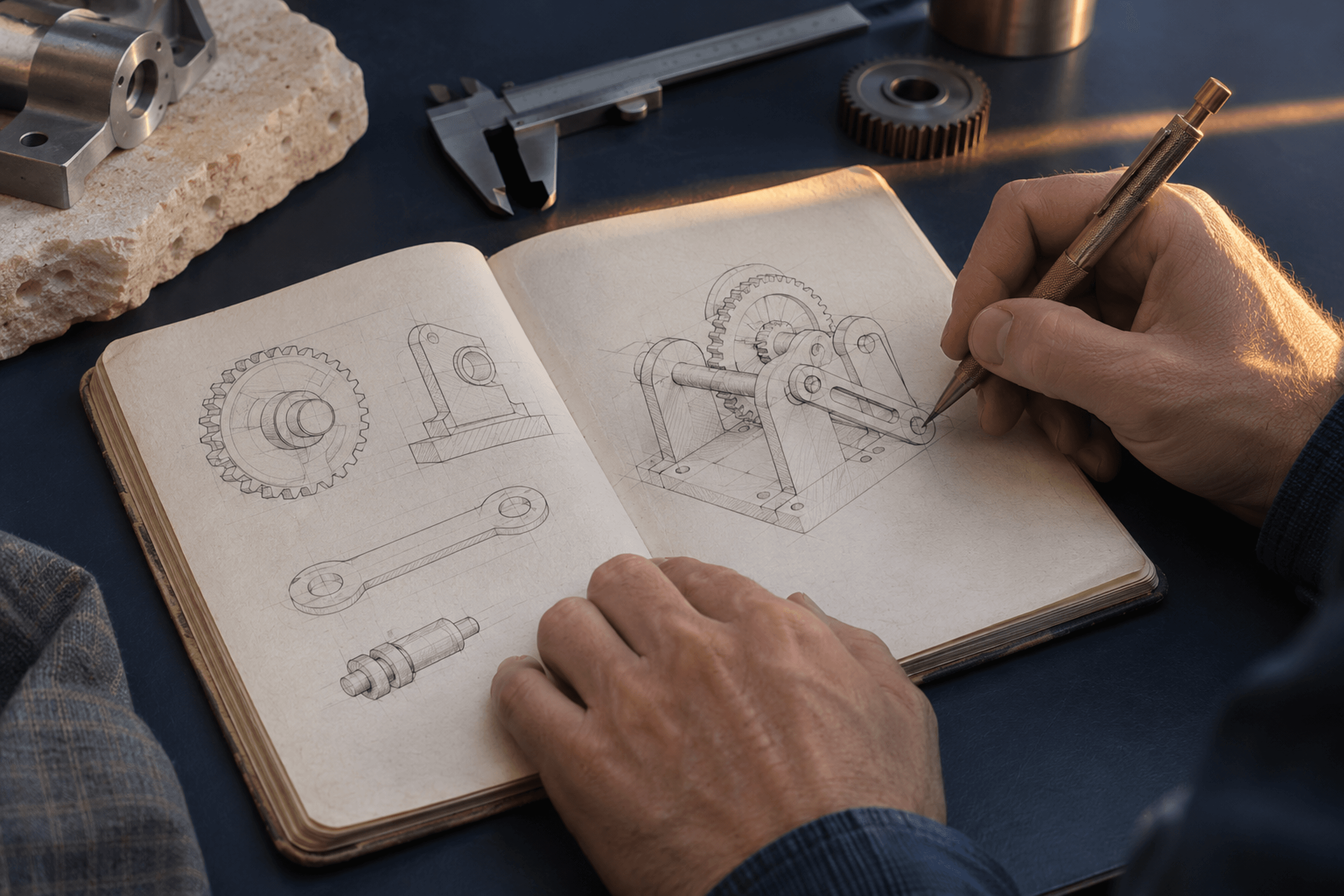
Two parts do most of the work, and both are drafted with your inventors.
A search first. The USPTO advises searching public records for similar inventions before you apply, so the claims can be drafted around what already exists.
A written description of the invention in terms that let a person skilled in the field make and use it.
One or more claims particularly pointing out and distinctly claiming the invention. They set the scope of what you can stop others from doing.
Drafted around what already exists
A provisional holds a filing date while the invention or the market settles. A nonprovisional is the one that is examined and can become a patent.
Provisional application
Nonprovisional application
| Provisional application | Nonprovisional application | |
|---|---|---|
| Examined | Not examined on its merits | Assigned to a USPTO examiner |
| Claims | No formal claim needed | Full specification and claims |
| How long | 12 months from filing, no extension | Until allowed or abandoned |
| Result | Holds a filing date and lets you use the term “Patent Pending” | Can issue as a patent |
The order depends on how settled the invention is and on your plans for launch and funding. We talk it through before anything is filed.
Not always, under US law. An inventor’s own disclosure, made within a limited period before the effective filing date, is not prior art against the inventor’s own claim.
If you have shown, sold or published the invention, say so when you first get in touch. The date matters more than the details.
Share the dates, not confidential details of the invention.
Each stage has its own deadline. These are the points where your attorney acts.
Tell us where your application stands.
The application is filed and assigned to a USPTO examiner.
After 18 months
Generally published, counted from the earliest filing date claimed.
The examiner sets out rejections or objections in writing.
Each reply argues the case, amends the claims, or both.
Fees within three months
Paid after the Notice of Allowance; no extension.
Three fee windows
Maintenance fees keep the patent in force.
It is the examiner’s written decision on your application, and it often rejects some claims at first. The reply period can often be extended for a fee, but only up to the earlier of the statutory maximum or five months after the set period.
A good response explains what the invention does differently, and narrows the claims only as far as it has to.
Aims for a final disposition within twelve months on average, with no more than 4 independent claims and 30 total claims.
The Board hears appeals from adverse examiner decisions. Andrew’s work includes drafting ex parte opinions for Board judges, so he knows closely how the Board reasons.
You work directly with the attorneys, who stay involved from the first draft to the last response.
Registered patent attorney with bachelor’s and master’s degrees in electrical engineering and experience across electronics, software and other complex technologies.

Registered patent attorney whose practice has included patent preparation and prosecution for startups, universities and Fortune 100 companies.
Keep these for after the conflict check, not the first inquiry. We offer flexible arrangements shaped around the scope of the work, your priorities and your business objectives, and explain the terms plainly.
No. The examiner decides whether claims are allowed, and no law firm can promise an outcome. What we can do is draft carefully and argue each response clearly.
We offer flexible arrangements shaped around the scope of the work, your priorities and your business objectives, and explain the terms plainly.
Yes. The attorneys work directly with clients' inventors, business leaders and legal teams.
Maintenance fees keep it in force. They fall due in three windows after the patent issues, each followed by a surcharged grace period, and each window is a natural point to decide whether to keep the patent. That decision is part of portfolio strategy.
After a patent issues, deciding which patents to keep is part of portfolio strategy.
Schedule a consultation and tell us the type of matter. Keep the confidential details of your invention for after the conflict check, when we discuss how to share them.
Ashton IP uses cookies for analytics to improve this site. See our cookie policy.